What to Check Before Booking a Power Flush

By TJS Heating & Gas Services Ltd

Start with what the heating is doing
Before arranging a system clean, make a few simple observations. They will not confirm that your system needs a power flush, but they can help distinguish a system-wide problem from an issue affecting one radiator or a heating control.
When the heating is on, note which radiators warm up and which do not. Check whether the problem affects one room, several radiators or the whole property. Notice how long each radiator takes to warm compared with others, and whether it heats evenly from top to bottom. Patterns are more useful than a general impression that the heating feels slow.
If your heating has separate zones (areas) or a heating timer, check which area is set to come on and whether the room thermostat is set as intended. Use the controls in their normal way and follow the instructions for your system. A setting or schedule issue can look like a heating fault, but it is different from contamination inside the pipework.
Look for patterns, not a diagnosis
A radiator that stays cold at the top while the rest warms may have air in it. A radiator that is cooler towards the bottom can be associated with settled debris, but that observation alone cannot establish what is in the system or whether flushing is the right remedy. A single cold radiator may also point towards a problem with a valve or with water moving through that radiator.
Compare the affected radiator with others nearby. If several radiators show similar uneven heating, or distant rooms are consistently slower to warm, record that pattern. If only one radiator is affected, note that too. It may mean the issue is local rather than a reason to assume the entire system needs cleaning.
Pay attention to changes in sound as well. Gurgling, persistent ticking or other unusual noises are worth mentioning, but they do not prove that sludge is present. Air, water flow, controls and other parts of the heating system can all affect how it sounds. Treat noises as useful information for an engineer, not as a test result.
Check only what is safe and accessible
You can check that radiator controls and thermostats have not been changed accidentally, provided they are accessible and you know how to operate them. Look for visible signs of leakage around radiators and accessible pipe connections. Do not remove a boiler casing, dismantle a valve, force a control that will not move or drain any part of the system to investigate.
Avoid treating bleeding a radiator as a guaranteed fix. It may not address the cause of uneven heating, and handling the system incorrectly can introduce other problems. If you are unsure what a control does, leave it alone and explain what you have noticed when asking for advice.
Keep a useful record
A short list is often enough. Write down which rooms and radiators are affected, whether they heat at all, where each radiator feels cooler, and whether the issue is constant or intermittent. Add any recent changes you have noticed, such as a new noise or a control setting that does not seem to respond. You do not need to take temperatures or open equipment.
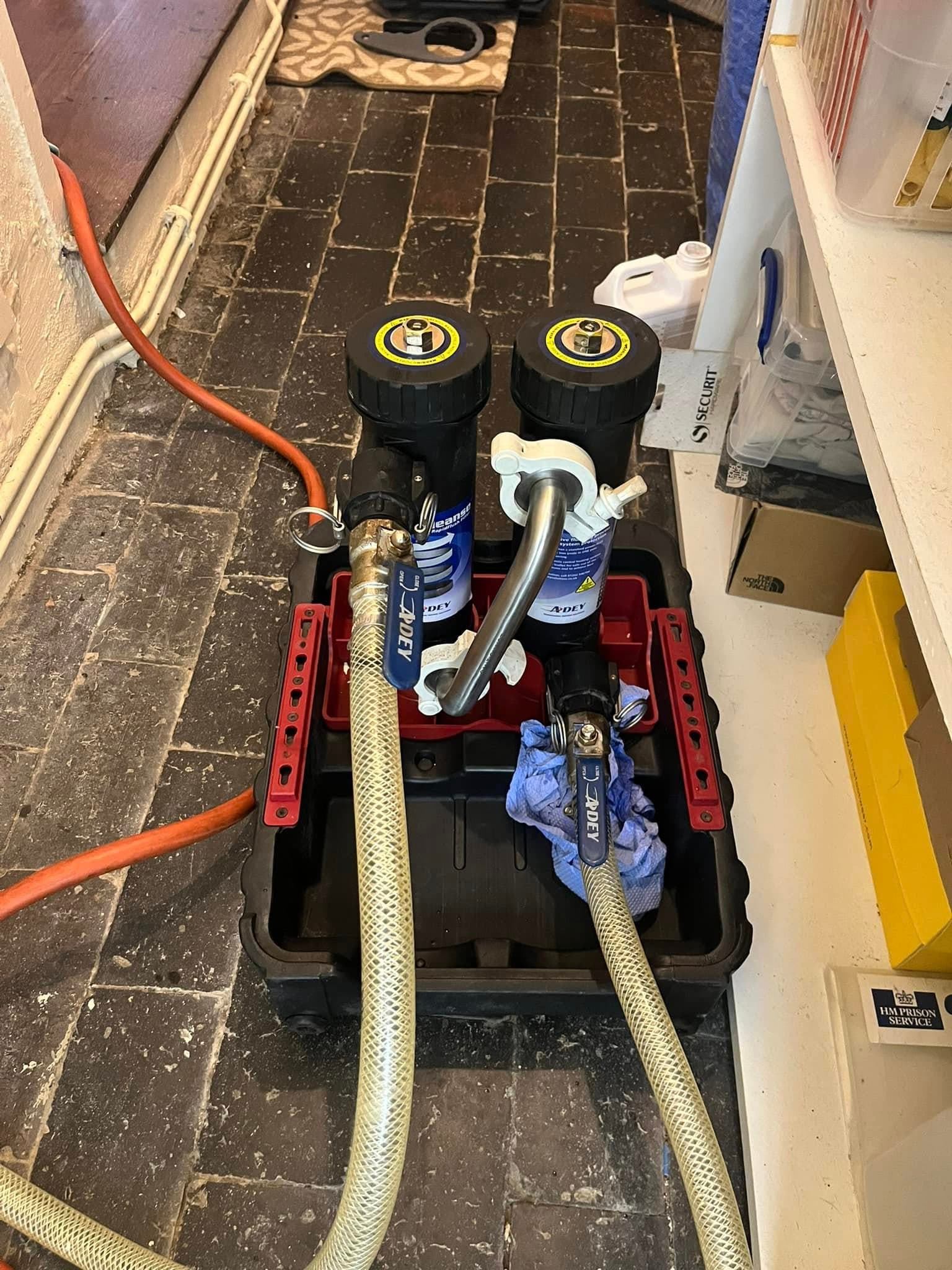
This information helps an engineer assess the symptoms in context. It also makes it easier to separate what you have directly observed from what you suspect. That distinction matters because a power flush is intended to clean the heating system, while a fault in a control, valve or another component may need a different response. Flushing should not be treated as a catch-all answer to every heating problem.
When to ask for an assessment
If the checks do not explain the problem, or several radiators are heating poorly, arrange an assessment rather than trying to diagnose the system yourself. The right next step depends on the symptoms and the system as a whole. A qualified heating engineer can consider whether cleaning is appropriate or whether another issue needs attention first.
For homes in Telford, Bridgnorth and the surrounding areas, we can discuss what you have observed and the heating system involved. Read more about our Power Flushing & System Cleaning, or contact TJS Heating & Gas Services Ltd to talk through the problem. Clear observations give us a better starting point for deciding what should be investigated.